Tuesday, October 23, 2012

Unusual Materials


When it comes to construction, almost anything goes. Throughout the years many people have moved into a more sustainable way of living. Some innovative architects have begun using recycled material such as styrofoam, ice, tires, etc, to create more environmentally friendly habitats. Recycled glass bottles are one particular unusual building material, which have been used a number of times in building forms.
One popular building form, which used recycled glass bottles was Edouard Arsenaults Bottle Houses of Prince Edward Island, which created a must-see tourist attraction situated in Cap-Egmont, Prince Edward Island, Canada. In the summer of 1979, Edouard started collecting bottles from his community. He then spent the winter in the basement cleaning the bottles and dreaming of his project. At the age of 66, he began his construction. “He was able to cleverly cement over 25,000 bottles in various shapes, sizes and colors, into three fantasy-like building” (bottlehouses.com). Unfortunately, the Canada winters are not very gentle, and the houses did not survive the effects of bad winter frosts. “Over the years, the buildings deteriorated to the point that they had to be rebuilt” (bottlehouses.com).
In the 21st century, Heineken factories decided to make their products eco friendly after the owner saw beaches littered with bottles. The design of the beer bottles was “a brick that holds beer, known as Heineken WOBO(world bottle)” (inhabitat.com). The bottle was designed to be interlocking, laid horizontally and bonded with cement mortar.  The bottle was ahead of its eco design time. “It let beer lovers, and builders alike drink, and design all in one sitting” (inhabitat.com).
            Perhaps more of an environmental expression today than an act of necessity, glass bottles have been found to make excellent building materials if properly spaced, stacked, and set for stability. They are a plentiful resource, hold their color well over time, provide great indoor lighting, and are generally easy to clean. When combined with a binding material such as cement, they prove to be a stable building blocks as well. As the years go on, more and more people create astonishing designs using the most surprising materials. It is fascinating to see these unusual material buildings and its only certain that in the future we will see even more unusual materials being used.


References
Maison, E. (n.d.). The Bottle House of Prince Edward Island. The Bottle House of Prince Edward Island. Retrieved October 23, 2012, from http://www.bottlehouses.com/

Kriscenski, A. (n.d.). HEINEKEN WOBO: A Beer Bottle That Doubles as a Brick | Inhabitat - Sustainable Design Innovation, Eco Architecture, Green Building. Inhabitat | Design For a Better World!. Retrieved October 23, 2012, from http://inhabitat.com/heineken-wobo-the-brick-that-holds-beer/


Tuesday, October 9, 2012

Design Expo 2012


Each year Texas Tech University interior design program puts on a Design Expo for the students. There are over 20 booths all displaying different products from fabrics to furniture. One particular booth that caught my eye was the Architex booth. Not only were there a ton of beautiful fabrics that they should us but they also have a new program on there website that allows you to put their fabric on a piece of furniture and get a jpeg version of it to trace if needed. They also informed us that if we ever needed samples to just call them and they will send them our way, which I loved because lets face it, the samples in the sample room are a little old.


These were some of the fabrics that Architex should us. One that particularly caught my eye was the fabric on the right. It was glittery (which I loved) but was also very durable and thick.

The Expo is always fun to attend. It allows the students to learn about future products and there is always good food which is a bonus! I learned a lot and enjoyed going around to each booth. I am certainly glad I went.

Friday, October 5, 2012

The purpose for this assignment was to go around campus and find several different ways that materials such as seating, wall coverings, and window coverings, exc, were used.

The first item is a seating application. 
This is a typical desk chair that was found in the Human Science building computer lab. 

The second item was floor applications. 
This carpet was also found in the Human Science building computer lab. 
Its made of a few different colors. 

The third item was window coverings. 
These were found in the Student Union Building. I found this to be a good choice of window coverings because something such as drapes would be to much for a building with so many windows. This type of window system allows for a lot of sunlight to come in, but also allows you to shut them but still see outside. 

The fourth item was wall coverings. 
This type of wall covering is wall paper. It had a checkered design. It was very plain and you couldn't really tell what design was on it but once you got up close it actually turned out to be aesthetically pleasing. 

The fifth application was panel systems. 
 These were found in one of our interior design rooms. The covering all four walls and go up to about 5 feet. 

The final application was fiber based art. 
These are flags found in the Student Union Building. 


Monday, September 24, 2012

All About Looks


Owners of All About Looks telling us about what they do. 
They specialize in draperies, upholstered furniture, bedding and much more.


All About looks work room.

Upholstered furniture work room. 
Some furniture is taken completely apart and redone since it was so cheaply made. 


Display of some of the trimmings that you can pick from. 


This couch was done in all sorts of fabric. 
This is a popular way to do a couch, to spice up traditional homes. 

Some of the window hardware that you can choose to use. 
Some people like the really bulky detailed hardware, and others like very clean and simple hardware. 


Tuesday, September 18, 2012

Fiber and Biopolymer Research Institute Visit #2


The Fiber and Biopolymer Research Institute's main focus is aimed at testing fabrics. During the second visit the instructor showed us many machines that each have a specific job in testing the fabric. 

The first machine she should us was called an abrasion tester. The main focus of this machine is to test the abrasion resistance of textile fabrics. They do this by setting the machine to however many rubs they want and at the end they see if the fibers in the fabric have broken. 


This is the breaking force and elongation machine. The purpose of this is to stretch the fabric to see when it breaks. 

The is the Random tumble pilling tester. This test shows the resistance to the formation of pills. This test causes pills to form on the fabric by random rubbing action produced by tumbling specimens. 


This machine is called the tearing strength elmendorf method. It computes the average tearing force of a piece of fabric from the energy loss of a falling pendulum and also examines how clean of a rip is made. 

Overall the experience was a very valuable learning experience. No one truly knows just what all goes into testing fabrics until all the machines are right in front of you. 

Tuesday, September 11, 2012

Fibers


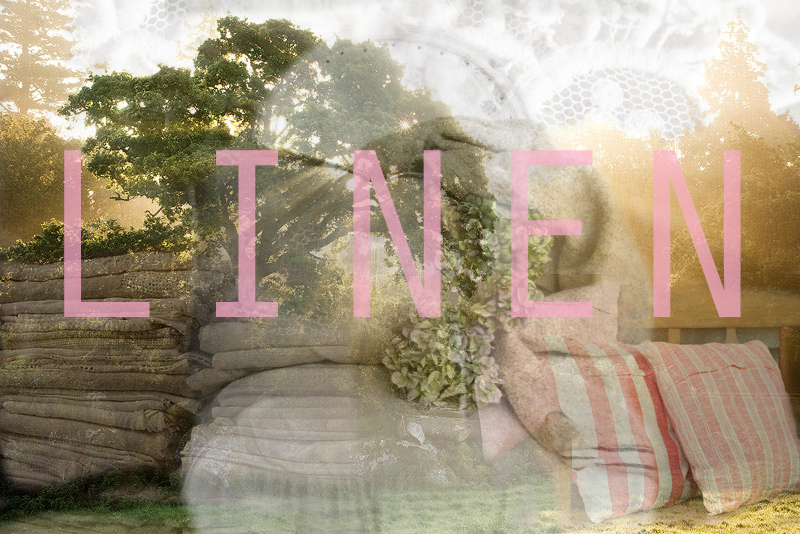
             Linen is one of the first fibers to ever be made and it comes from the fibers of the flax plant, Linum usitatissimum. Linen textiles appear to be some of the oldest in the world and there history goes back many thousands of years. As early as 3,000 B.C, the fiber was processed into fine white fabric and wrapped around the mummies of the ancient Egyptian pharaohs. Over time, expanding trade routes brought linen to Europe, the Near East, and America. “Linen is popular to many cultures for its strength, natural luster, and its absorbency” (nyfashioncenterfabrics.com).
There is no special design process for the manufacture of linen yarn. It takes about 100 days from seed planting to harvesting of the flax plant. “Flax cannot endure very hot weather, therefore, in some countries flax is grown in the winter. In commercial production, the land is plowed and worked into a good seedbed by dicing, harrowing, and rolling. The seeds must be shallowly planted and may be done by hand” (historyforkids.org).
After about 90 days, the leaves wither, the stem turns yellow, and the seeds turn brown, indicating it is time to harvest the plant. As soon as the plant appears brown, by hand it is pulled out of the ground, grasped just under the seed heads and gently tugged. The tapered ends of the stalk must be preserved so that a smooth yarn may be spun. The stalks are tied in bundles and are ready for extraction of the flax fiber.
The plant is passed through coarse combs, which removes the seeds and leaves from the plant. The fiber is then combed and separated by length. The woody bark surrounding the flax fiber is decomposed by chemical retting, which loosens the pectin or gum that attaches the fiber to the stem. If the flax is not fully retted, the stalk of the plant cannot be separated from the fiber without injuring the delicate fiber.
After the retting process, the flax plants are squeezed and allowed to dry out before they undergo the process called breaking. The decomposed stalks must be sent through fluted rollers, which break up the stem and separate the exterior fibers from the bast that will be used to make linen. The fibers are now combed and straightened in preparation for spinning. “Long linen fibers are put through machines called spreaders, which combine fibers of the same length, laying the fibers parallel so that the ends overlap, creating a sliver” (historyforkids.org). The sliver passes through a set of rollers, making a roving which is ready to spin. The linen rovings are then put on a spinning frame and drawn out into thread and wound on bobbins or spools. The fibers are formed into a continuous ribbon by being pressed between rollers and combed over fine pins. This operation constantly pulls and elongates the ribbon-like linen until it is given its final twist for strength and wound on the bobbin.
            “The atmosphere in the spinning factory must be both humid and warm in order to make the fiber easier to work into yarn” (historyforkids.org). The linen is run through a hot water bath, which binds the fibers together, creating a fine yarn. The moist yarns are transferred from bobbins on the spinning frame to large take-up reels. These linen reels are taken to dryers, and when the yarn dries, it is wound onto bobbins for weaving or wound into yarn spools for varying weight. The yarn now awaits transport to the loom for weaving into fabrics, toweling, or for use as twine or rope.
“Today, linen is usually an expensive textile, and is produced in relatively small quantities. Since linen resists dirt and stains, it is relatively easy to take care of.” (historyforkids.org). Linen remains a key natural fiber known for its strength, smooth cool texture, and sophisticated appearance. “Linen is a popular choice for warm-weather clothing because it feels fresh and appears crisp. Linen is a top choice for fine upholstery and window treatments and can be used for just about anything” (Yates, p. 38).


References

Carr, K. (n.d.). Linen - History of Linen for Kids!. Kidipede - History for Kids - Homework Help for Middle School Social Studies. Retrieved September 8, 2012, from http://www.historyforkids.org/learn/clothing/linen.htm

Fabric Information: Linen, History of Linen | NY Fashion Center Fabrics. (n.d.). Silk Fabric, Cotton Fabric, Online Fabric Store | NY Fashion Center Fabrics. Retrieved September 8, 2012, from http://www.nyfashioncenterfabrics.com/linen-fabric-info.html

Yates, M. (2002). Fabrics: a guide for interior designers and architects. New York: Norton.